SOLVANG TRIP 2025

We hope this is the first in a series of US trips to other Danish settled communities. Coincidentally, our first trip made its way to Solvang. 


The Solvang Tour began with everyone arriving at the Solvang Inn and Cottages on Monday, September 20, 2025. Travlers came from all over the country including Connecticut, New Yourk, Iowa, Illinois, Wisconsin, Minnesota, Virginia, Pennsylvania and Oregon. The first night in town included an informal gathering for everyone including dinner and drinks around the patio/pool followed by a little down time so they could all meet and relax after a very early day of travel. 


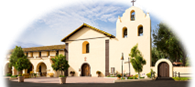
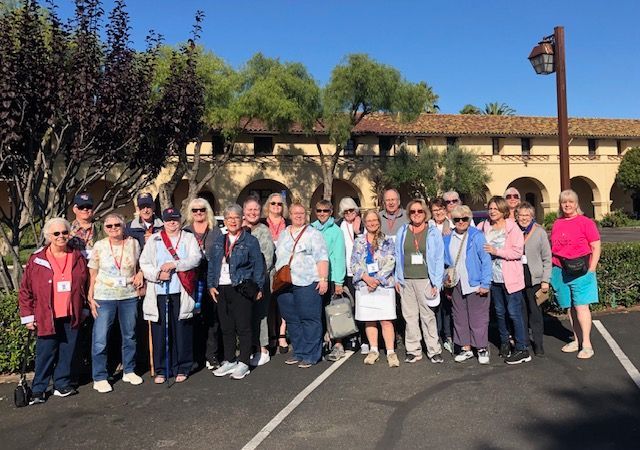
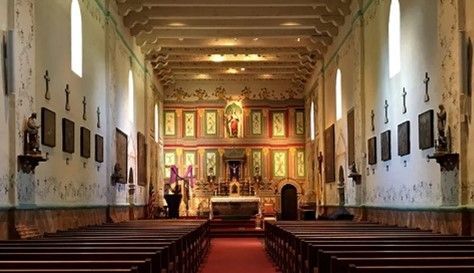
Tuesday morning the tour started with the Sant Inez Mission. The Mission was established in 1804 and is an important part of the era's history. The attendees went on a self-guided tour through several rooms which held artifacts and robes from the early 1800's. The church is beautiful with the carvings, old artifacts and painted walls. The Mission still holds weekly services. 
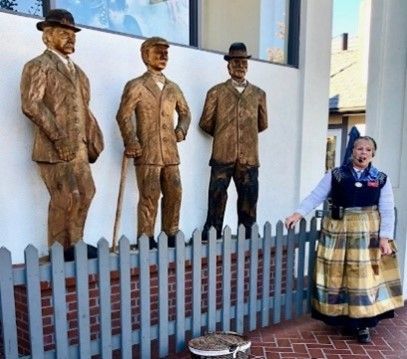
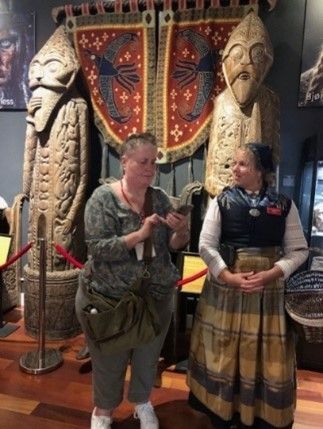
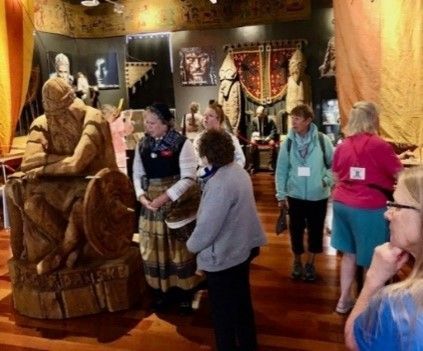
After the Mission visit, we boarded the bus and headed to the Solvang Visitor’s Center where we met Kirsten Klitgaard, our tour guide for the morning.   Kirsten came dressed in costume and with lots of enthusiasm for the town and our Danish heritage.  She talked about Solvang’s early history, how and why town was established, details of the land purchase, etc.   There are carved wooden statues of our Founders: Rev. Benedict Nordentoft, Rev. J.M. Gregersen, and Peter Hornsyld, on display in front of the Copenhagen House Shop.


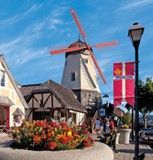
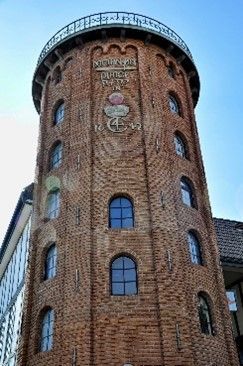
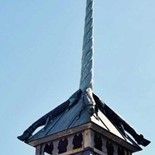
During our walk through town, Kirsten talked about the thatched roof that we still have on one of our buildings (grandfathered in), as we can, unfortunately, no longer use real thatch.  She spoke about the building with the dragon tail tower, a replica from Denmark’s historic Stock Exchange building (that sadly, recently burned).  She also pointed out the Round Tower, which is a 1/3 scale of the Rundetaarn, built in the 17th century.   She spoke about our storks, architecture, and the many changes that took place in Solvang’s early years.   


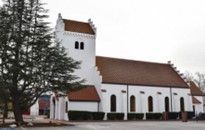
Solvang’s original buildings were built with a Spanish or western style as other early California towns.   Then in 1928, the Bethania Lutheran Church was the first structure built in the traditional Danish architecture.  During the 1930’s, a transition to a more traditional Danish architecture began to take hold, with the half-timbered style (bindingsverk).  In 1947, Solvang became well-known, and ultimately a travel destination, due to an article in the Saturday Evening Post.   


Kirsten made it such an informative and enjoyable tour that everyone seemed to enjoy.    She periodically posed a question to the group based on something she had said during the tour or a Danish fun fact.   The first one to answer her question received a prize of a Flødeboller from Ingeborg’s.  Delicious!!  There were a couple of winners, along with the last, very lucky winner, of a marzipan pig!! 


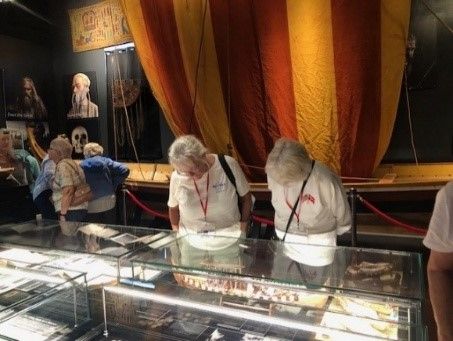
An interesting and unexpected part of the walking tour was the opportunity to include the Viking Museum in the Copenhagen House.  It is small but contains wonderful displays of rare 1000-year-old Viking swords, axes and spearheads.  They also display replicas of clothing, weapons, jewelry, etc.  They are the only US Museum to be affiliated with the Follow the Vikings Destination Viking Association.  Our timing was perfect as an authentic boat was delivered and installed at the Museum just the week before.  


At the end of the tour, we were all treated to Ingeborgs chocolate, compliments of Kirsten, and received a Solvang ornament.  Kirsten was so pleased that we brought the tour to Solvang and was happy to support the Sisterhood.  

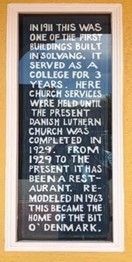
The afternoon was free for everyone to enjoy as they wished.  Later that evening we boarded the bus and made our way to the Bit O’Denmark Restaurant.  The restaurant building was one of the first in town, built in 1911, then was turned into a restaurant in 1963.  Susie Sorensen, a fellow Sister, and her staff, did a wonderful job with our frikadellar & medistepolse or salmon dinners.  

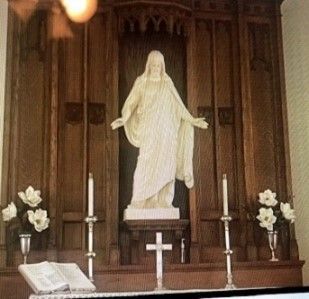
Wednesday morning we made our way to the Bethania Lutheran Church.  The church was built in 1928 in the traditional Danish design.  The interior is beautiful with the hand-carved wood railing, pulpit, and alter, made by carver Jes Smidt.  The Thorvaldsen’s Christ statue on the alter was a gift from a Danish church in Alder, MN.  There is also the traditional ‘ship’ hanging in the center of the church.


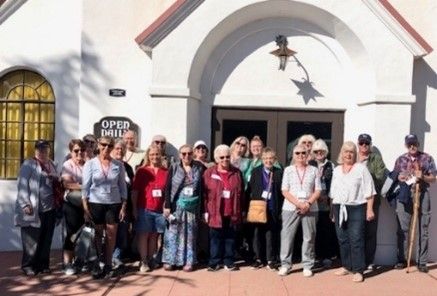
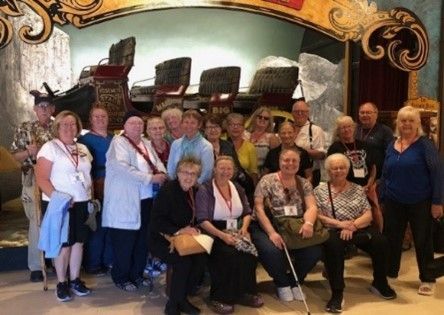
We took a little time to wander through the church and grounds and took a few group pictures. 


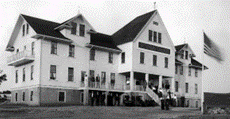
The Atterdag Village Senior facility is just across the street from the church, so we took a quick drive through so everyone could see the location where the Atterdag Folk School once stood.  Built in 1914, it was unfortunately torn down in 1970 due to termite and other structural concerns.   


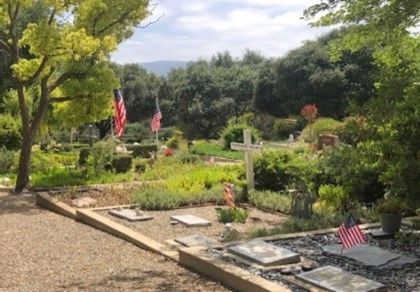
After the drive through, we made a stop at our Bethania Church Cemetery.

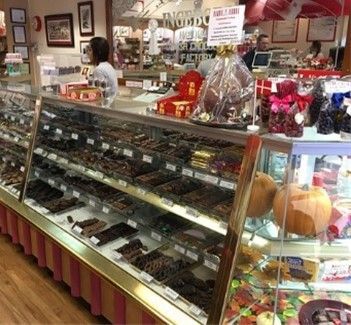
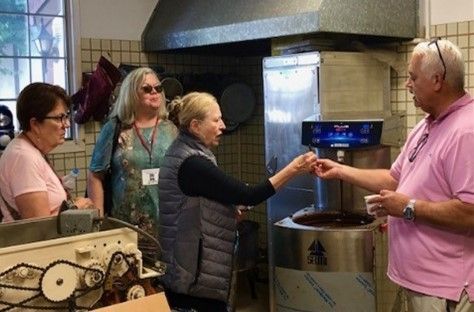
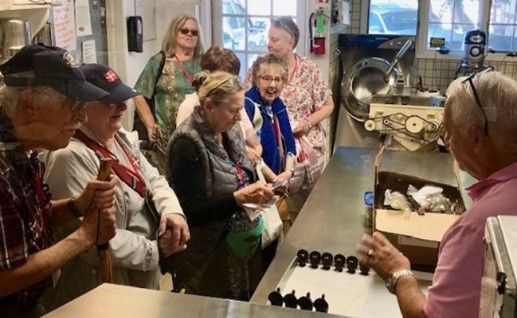
Back to town and it was time for a tour of the Ingeborg’s Chocolate Factory.  Ingeborg’s has been a part of Solvang for over 60 years.  Although I’m a somewhat frequent shopper of their dark chocolate and marzipan, I had never taken the tour before so was excited to take part along with the rest of the group.   The process was interesting and tasty – as Kim offered us delicious samples!!  Ingeborgs offers many more flavors of chocolates (fillings) than I could have imagined, 100+.  It was also interesting to hear that they ship large quantities of their chocolate across the US and abroad.  


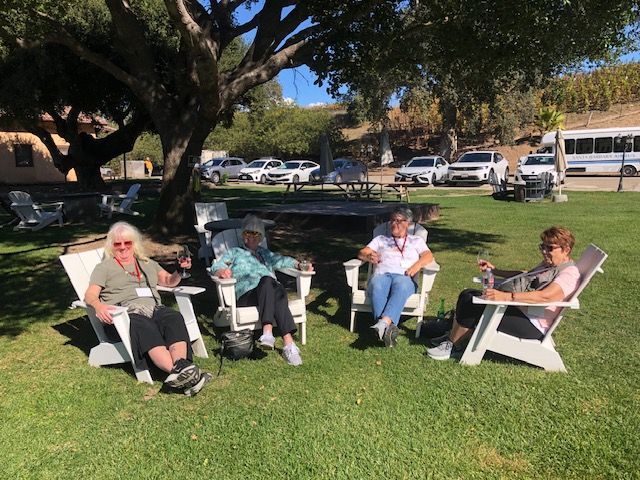
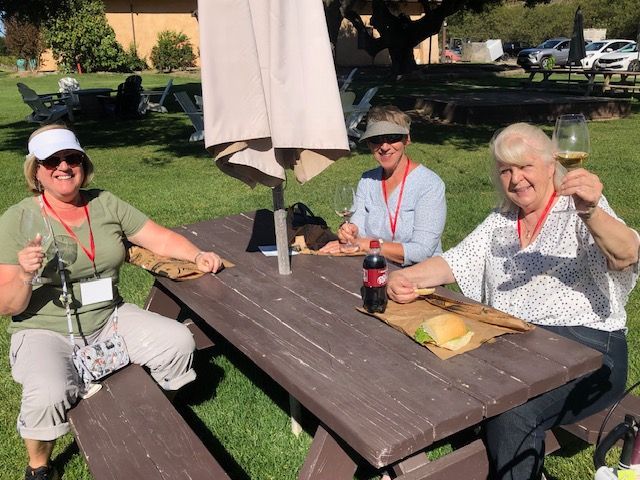
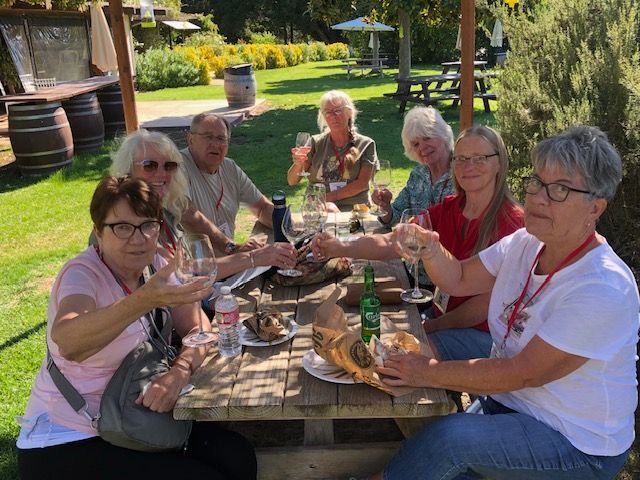
Earlier, several of our group members asked to visit a winery if possible, so I arranged an afternoon trip to the Rideau Winery.  Rideau has beautiful park-like grounds with an old historic adobe used as their tasting room.   We were able to bring sandwiches and drinks, and most everyone participated in the wine tasting.  The server came to our tables so all could enjoy the weather, vineyard and wine.  The atmosphere was relaxed, with a few of our ladies soaking up some sunshine in the large Adirondack chairs with wine in hand.   A very California thing to do!!   We’ve been blessed with fantastic weather, high 70s to mid 80s all week.  Yeah!!

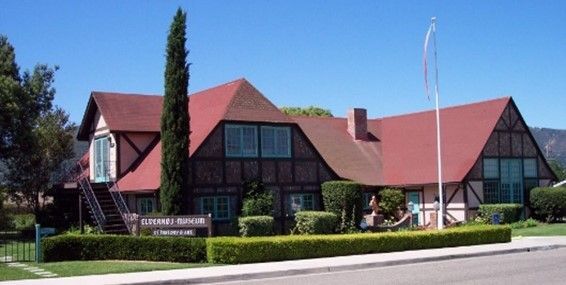
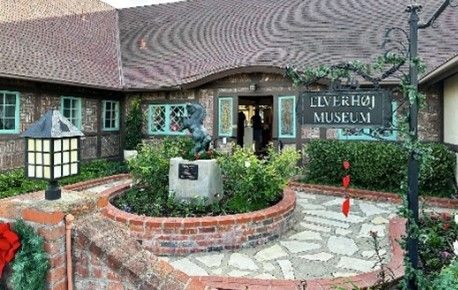
Around 3:30, we headed back to town to drop everyone at the hotel to take a break and get ready for the Elverhoj Museum tour and reception.   


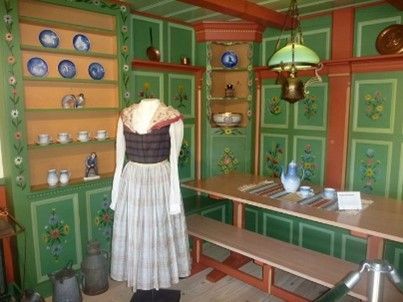
With the wonderful help of several of my lodge sisters, we set up a buffet table and bar with appetizers and pastries, and decorated the patio.  Everyone was welcome to explore and take in the Museum exhibits, the outside grounds, and the Diorama, which shows a snapshot of what Solvang looked like in the late 1920’s.  Our Mayor, David Brown, stopped by the Museum to greet our guests and thank them for coming and hoped they were enjoying their stay. 


Our Museum’s Executive Director, Sandie Mullin, was very appreciative of the group’s visit.  The Museum plays such an important role in the community by collecting and archiving our Danish history.   It also promotes our Danish culture and the amazing art of others in our area.   "The Spirit of Solvang" is an exceptional book that took years to create and presents Solvang's history in a unique way.   Sandie generously offered each tour member a copy of the book to take home, encouraging them to read and share it with their family, friends, and fellow Sisters.   The reception was enjoyed by all.  


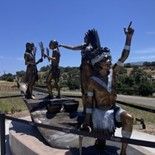
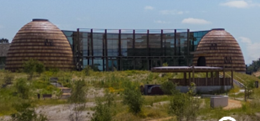
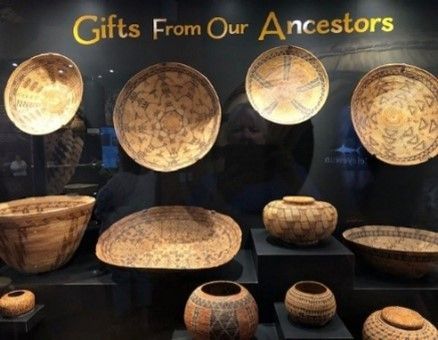
Thursday morning, we headed out to the community of Santa Ynez to tour the Chumash Museum.  The Native American elders and museum planners worked on the Museum build for about 8 years – taking into account that construction and any forward progress stopped for about 2 years during Covid.  Thankfully, they were able to open their doors in May of this year.   What a beautiful museum!  The displays, artifacts, and use of technology in certain interactive exhibits were amazing.

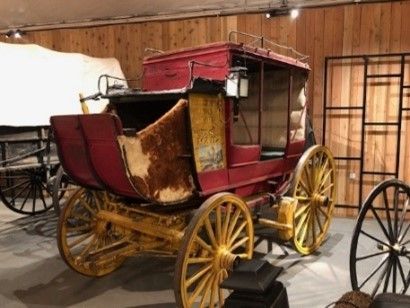
Once everyone had explored the museum and gift shop, we took a short drive up the street for a guided tour of the Janeway Carriage Museum.  The town of Santa Ynez was officially settled in 1881 and has maintained its western feel with its architecture and surrounding ranches and vineyards.   One of the stagecoach stops in the late 1800’s  between Los Angeles and Monterey was located in Los Olivos, just a few miles up the road.    


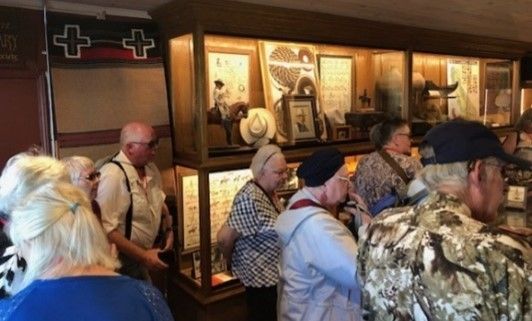
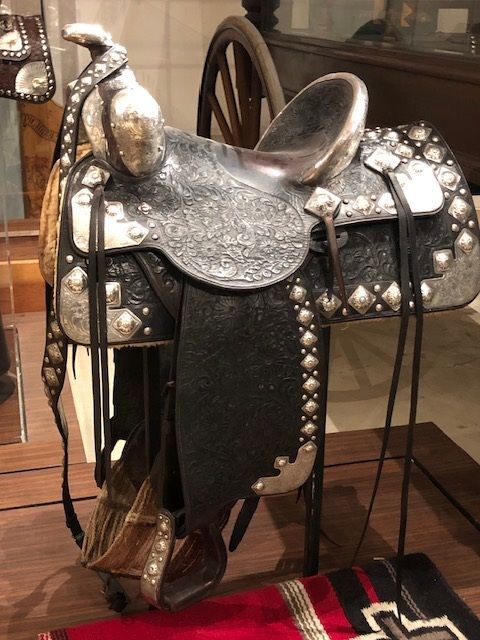
The carriage house was filled with amazing wagons and carriages!!  There were also many old, beautifully made saddles, harnesses and bits, a wall of many of our old ranch branding irons, western artwork, etc. 


After a little free time in the afternoon we met at the Solvang Brew Restaurant for our final dinner.   Sadly, our trip was coming to an end.  The week just flew by.  I want to personally thank all those who made the trip to Solvang to share in this adventure.  Christy Phillips, Debbie Becker, Sharon Wellsandt, Karen Manuel, Lisbeth Manuel, Marge Orth, Ann Martin, Ken Paulsen, Sue Fisher, Dennis & Sheila Brogger, Lars & Bente Rasmussen, Laura Abbene, Marueen Steenblock, Kathryn Hansen, Marilyn Dore, TerriFreeman, Caroline Christensen, Pat Rua, Marilee Nielsen, and Kirsten Pedersen.  They were an amazing group and so much fun to host.  I had a great time! 


We, on the National Board, hope this is the first in a series of short trips to other Danish settled communities across the US.  The initial plan was to offer the trips in the years between the Denmark Trips.  So please stay tuned for more details to come!!


Past National Trips


2024

2022: Submitted by Carol Rudisill

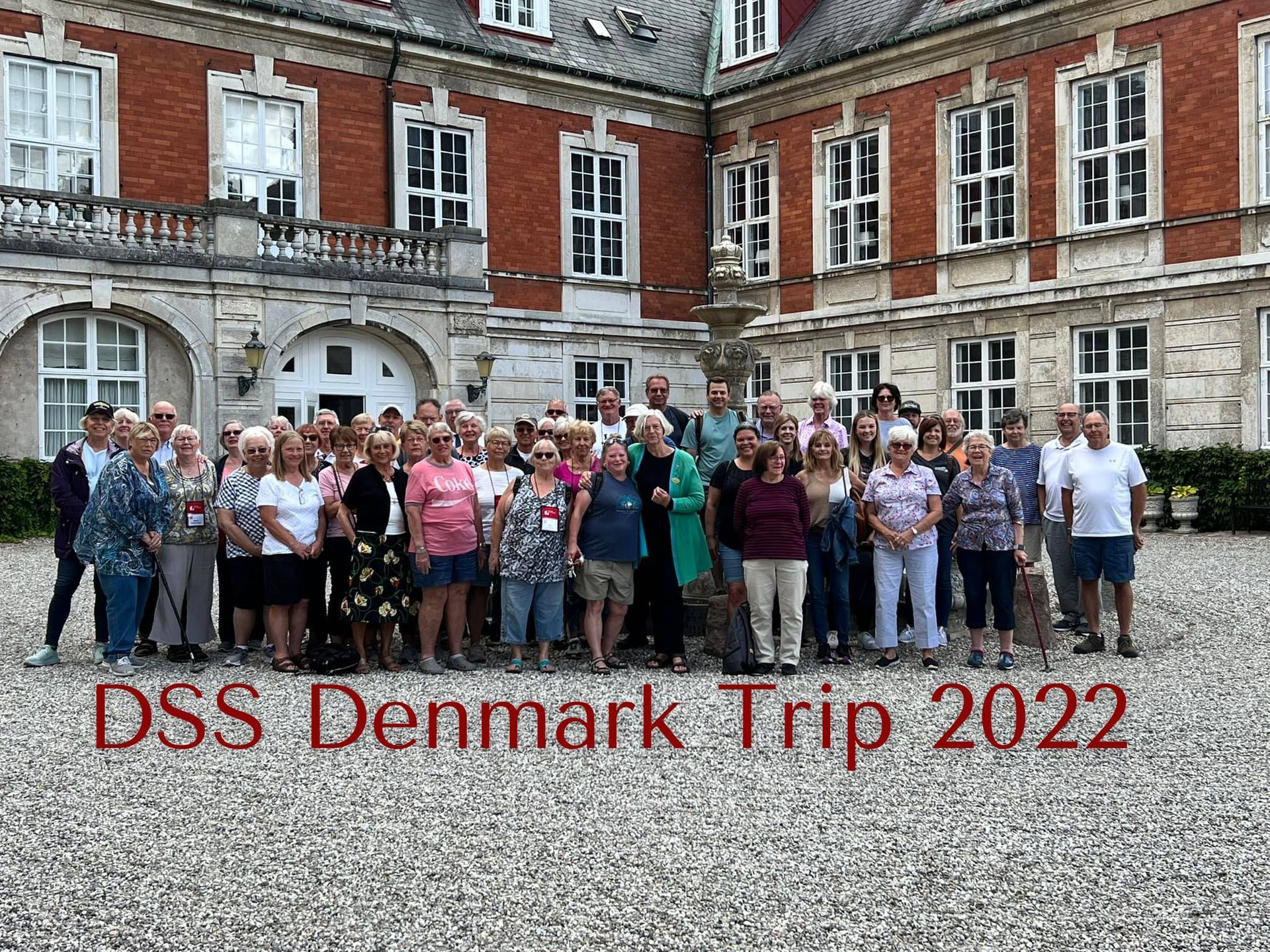
The Denmark Trip of 2022 was such a happy experience for everyone! We had all been very disappointed that the 2020 trip had been canceled due to the Covid 19 pandemic. It was a joy to be able to travel again!


We began our tour with three days in Copenhagen. We were able to visit many of the landmarks we have all heard so much about: The Little Mermaid, Amielienborg Palace where Royal Family has their residence, Tivoli, Grundvig’s church, and a most wonderful tour of the Copenhagen City Hall.


From Copenhagen we embarked on our tour of the Schleswig-Holstein area of Denmark and sometimes Germany. We were able to tour Frederiksborg Castle and see the royal gardens that were amazing!


We then learned about the Dannewerk fortifications that were built to protect the area during the nSchleswig-Holstein War. The wars that were fought over the Schleswig-Holstein area were hard-fought and bloody. Both Denmark and Germany wanted the area as part of their country. When the Germans would win the war the Danes were forbidden to speak Danish, or celebrate Danish traditions. The Heritage of the Danish people was nearly erased. Then the Danes would win the war and they were able to recognize their heritage once again.

We stayed in some beautiful hotels and had marvelous food. A couple nights we were right on the water. We stayed in a hotel in Flensburg that was very close to a canal that ran through town. It was quite charming.


Another town we visited was Møgeltønder, which is known for its picturesque main street and a 12th century church. Near Sønderborg we were able to stand with one foot in Denmark and one foot in Germany.


We visited Faaborg Kirkeballe- a very old church with a maze in the front. (a picture of this was on the cover of one of our Danish Sisterhood News)


One afternoon we took a ferry to Bjørnø By which is an island near Sonderborg. We were able to explore this little island and saw one of the most unique “room rentals” I have ever seen. It was a tree house with a ladder to enter. This was also the first place I had ever heard of black licorice ice cream. Which, by the way, was WONDERFUL!

Another little town we were able to explore was Nyborg. This little town was centered around a little lake. There were many homes that were thatched houses. We had a lovely frickadiller lunch at one of the little restaurants.

The best part about this trip was the fact that we were able to share traveling with fifty other Danes from America. We saw and learned part of Denmark’s history that I didn’t know enough about. It was great to learn every day! Every meal we had was great traditional food-open faced sandwiches, pork with crackling, sugared potatoes, and so much more. It’s great to go to places that are not on the main roads. Because of that we were able to talk to locals and enjoy the “real” Denmark, not just the touristy parts.


2018: Submitted by Carol Rudisill

In the fall of 2018 my husband and I participated in the tour of Denmark sponsored by the Danish Sisterhood in America. We went knowing only one couple from Iowa, but it didn’t take long to develop friendships. On the bus we talked, sang, and were treated to an enjoyable dialogue from our tour guide about all the things we were seeing. During stretch breaks off the road we were treated to coffee, juice, schnapps, or beer along with a snack most times.


Our first evening was a dinner and the introduction of our tour guide Benedikte Eihlers at a lovely restaurant in Copenhagen. The following morning we left Copenhagen for Frederikshavn where we spent the night and prepared for a ferry to Samso. Samso is a relatively small island off the west coast of Denmark. Samso is also where the Samso Energy Academy is located. Samso is a place where green energy is studied and nearly 100% of the island is running on only the green energy of wind and solar. We were able to attend a lecture on this process of study that was indeed inspiring.


While on Samso we also were able to stop at a silversmith’s store and workshop. This jeweler created different pieces for the Queen of Denmark to wear. It was interesting to see her work and many purchased some of her jewelry.


We also took a ferry to Laeso. Laeso is a smaller island that is known for its salt. The ground water is quite close to the surface and is brought into a small building where the water is put into troughs and a fire is constantly fed so that the water is evaporated and salt is left behind. It is not like our table salt, but flakes that are flat. This is the only place that makes this salt and products including licorice, porcelain bowls to hold the salt with little spoons to use to gather it from the bowl, and many other items. We were also introduced to Salty Carmel liquor cordial. So good! That evening we were treated to people from the isand presenting the women’s history of Laeso. The men living there were fishermen and were often gone for long periods of time. The women were left at home to work the gardens, raise the children, and keep the town running. They told us about their historical clothing and some of the meanings of what they wore.


From this stop we continued on through Sweden and stopped in Ystad. Ystad is a very old section of Malmo. We were all able to explore and shop this are on our own.


We then took another ferry to Bornholm. Bornholm is a large island off the southern tip of Sweden. It is the farthest east and southern most point of any of the Danish islands. This was probably the most fierce ocean travel I have ever done! We rocked from side to side and many people had difficulty walking anywhere. They actually took out a HUGE old ferry that is only used in bad weather. It was indeed an unusual crossing to Bornholm, but once there we had a wonderful time. The town had many shops and places of interest. We had a day of individual exploration. I loved the glass blowing demonstration, the candy making demonstration, and the wonderful smoked fish. While on Bornholm we were able to see one of the noldest round churches built around 1350. We also toured the Hammershus Castle which is now a ruin.


While on Bornholm we took another short ferry from Gudhjem to Christianso and Frederikso which is part of the Ertholomene – or archipelago- off Bornholm. As we were leaving, there was a group of townspeople singing and playing music to “see us off”. These are both very old towns/cities that are a must see living history. The buildings were quite old and the restaurant made us the most wonderful meal. We were able to explore both of the two towns on our own.


Some of the best parts of the Denmark trip are the opportunities we have to learn and see the history of many different parts of Denmark. Meeting people around the country and getting to talk to them are a high light. Even though I had been to Denmark several other times, it was fun seeing it with others who love Denmark and the wonderful traditions and heritage we all care about.


2014: Submitted by Bente and Lars Rasmussen

The first DSS Danmark Tour in 2014 was an extensive roundtrip of Denmark. We got introduced to our fantastic tour guide Benedikte Ehlers with a three days tour of Copenhagen and up along the coast to Helsingør. Over the next week we tour 1000 miles around Denmark.


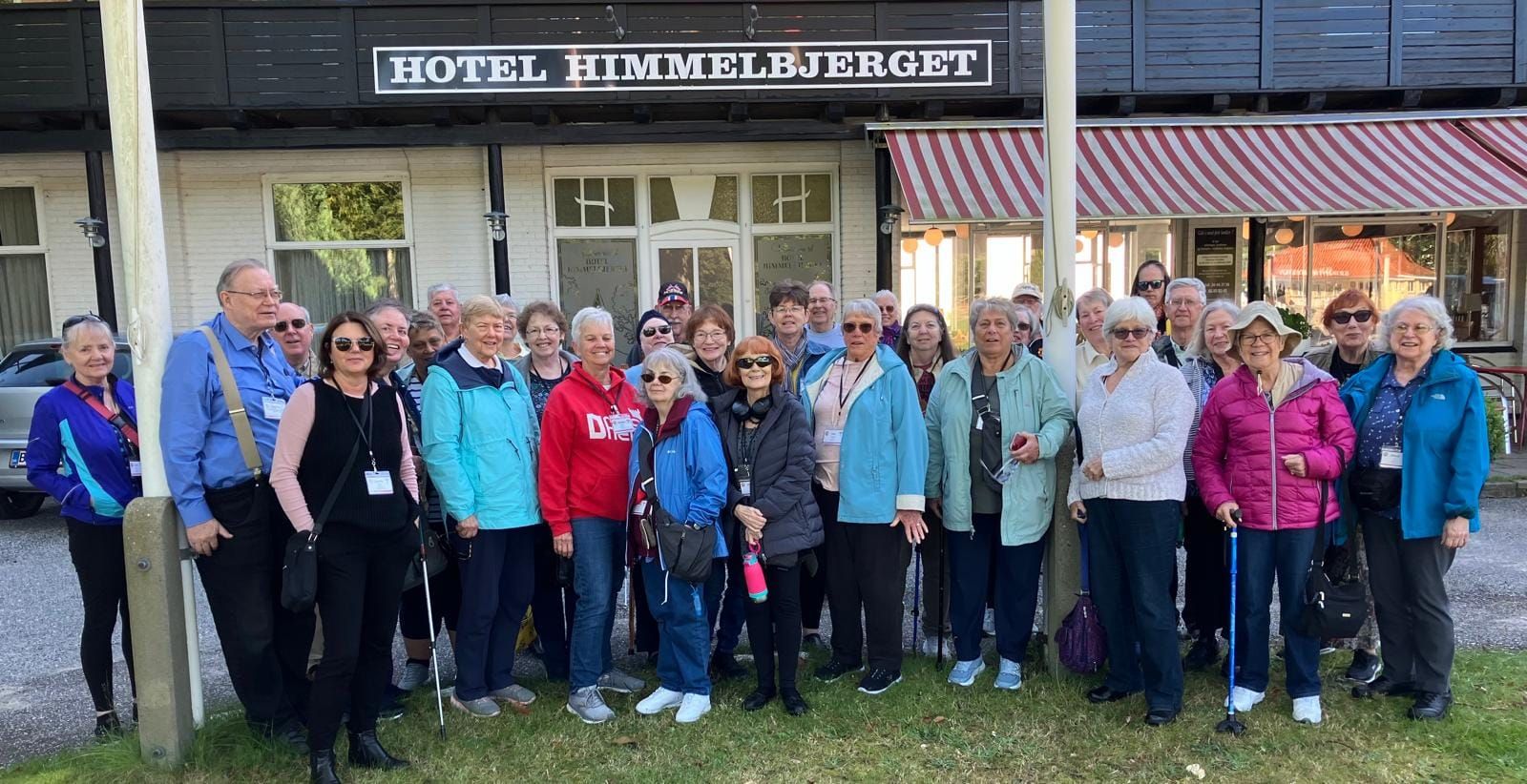
Our bus took us to Jutland started with the experience of staying on castles, manor houses, old inn (many times no elevators) and newer hotels. The most amazing experience was the stay at those old places, where you 40 years ago were not able to visit, except if you had connections to the family that lived there. Our living quarters were rooms in the castle, and sometimes named after the people who had lived there. The great experience was to have 3 course table cloth candle light dinner and wine in the grand dining rooms followed by evening coffee with sweets in the salons. You did take over the place for a moment. The newer hotels gave us the contrast of the today’s world of living.


We were also able to participate in the 4th of July Rebild Fest and experience the Danish-American Fellowship, where we met with the US Ambassador to Denmark, Rufus Gifford. In Copenhagen area we visited Rosenborg Castle, Amalienborg Museum, Copenhagen Town Hall, Karen Blixen Museum, The little Muermaid, In Jutland we visited Himmelbjerget, Skagen Museum, Grenen (the north point of Denmark), Ribe- the oldest town in Denmark, Christianfelt, Skamlingsbanken -border to Germany 1864-1920, the Jelling Runic Stones (The birth certificate of Christianity in Denmark.) and a number of churches that are all part of Danish history.


Benedikte Ehlers made this tour more personal than anyone could expect. She opened up her home near Silkeborg for our group with wine and cheese, and she told her family’s relation to the place that was built in 1918 by her great grandfather, who was Mayor of Copenhagen for 28 years. She grew up on Rømø, and she showed us the island with the old family farm that was just getting a new thatch roof, where her sister served old fashion afternoon coffee with home baked kringle. 


This was a tour of our lifetime. We saw so much of Denmark, Danish culture and unique places. Even though we grew up in Denmark, the experience was fascinating.